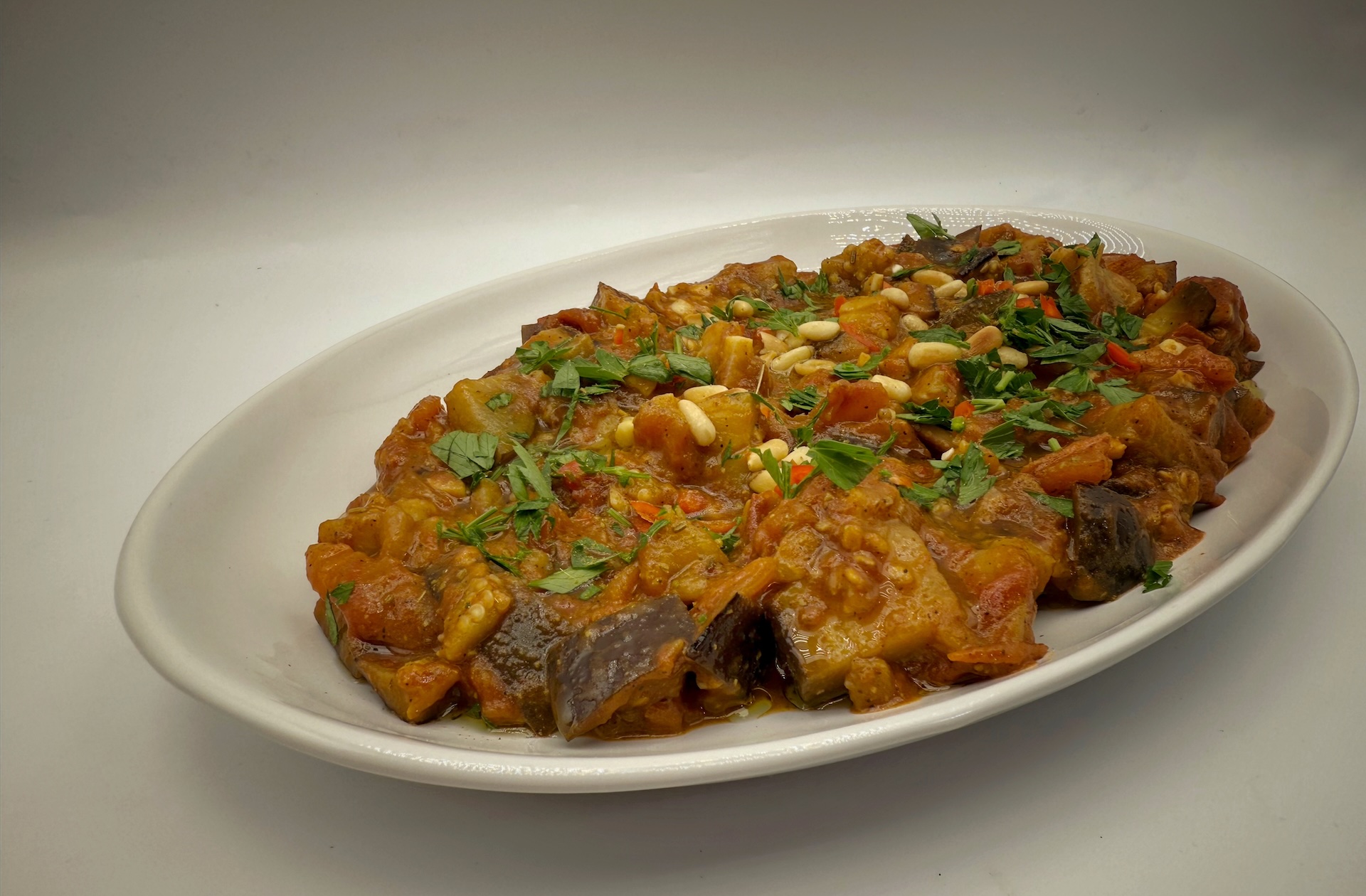
Moroccan Eggplant Zaalouk
Moroccan eggplant zaalouk with tomatoes, warm spices, and olive oil — a simple vegan dish that works as a dip, side, or mezze favorite.

Servings
.svg)
Prep Time

Cook Time

Ingredients

Total Time
Ingredients
Equipment
Instructions
It’s no secret that Moroccan cuisine is one of my great loves. I’ve been to Morocco three times in recent years, and honestly, I would go back anytime just for the chance to taste more of their incredibly nuanced food.
And today I want to tell you about a vegan dish I ate there called zaalouk. Most likely, there are details in this recipe that a Moroccan cook would debate—and that’s perfectly fine.
This is my personal way of recreating one of the zaalouk dishes I ate in Morocco and loved the most, using memories, flavors, and a lot of respect for the original spirit.
Zaalouk Recipe – Step-by-Step Instructions
- Heat 4 tablespoons of olive oil in a wide pan.
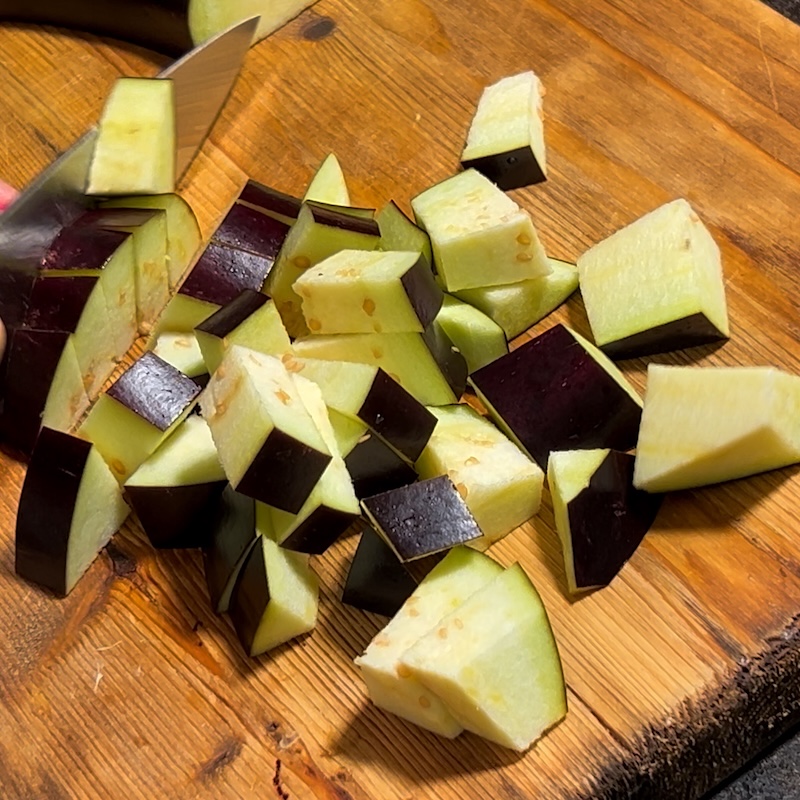
- Cut the 1 eggplant into 2–3 cm chunks.
- Sauté for about 5 minutes, until lightly golden.
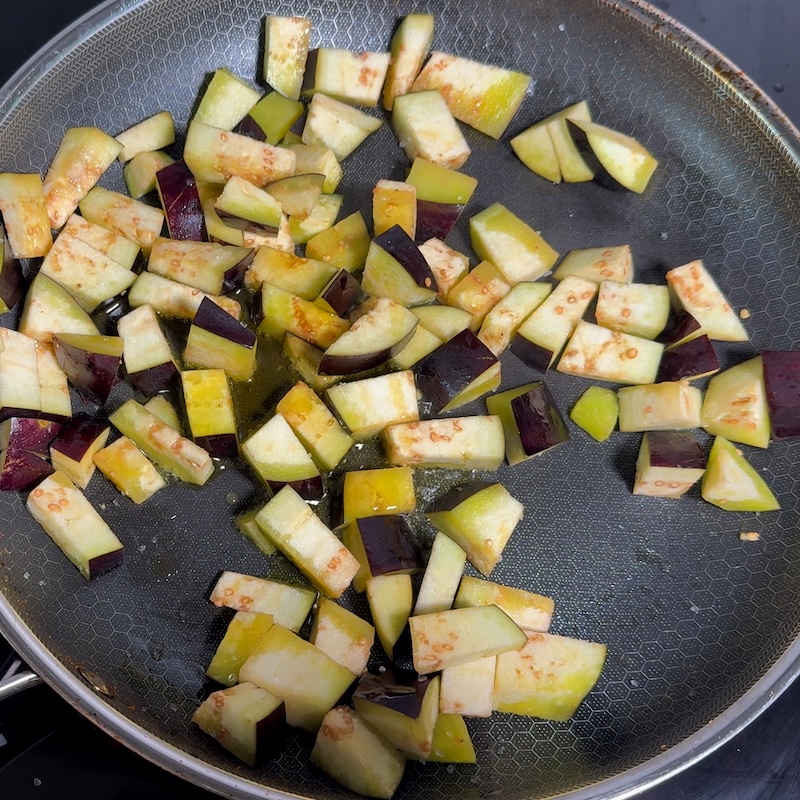
- Remove the eggplant and transfer it to paper towels to drain excess oil.
- In the same pan, add 1 more tablespoon of olive oil and sauté 6 finely chopped garlic cloves until fragrant.
- Add 2–3 tomatoes, finely diced, followed by 1 tsp cumin, 1 tsp coriander, 1 tsp ras el hanout, 1 tsp paprika, ½ tsp sugar, salt, and pepper to taste.
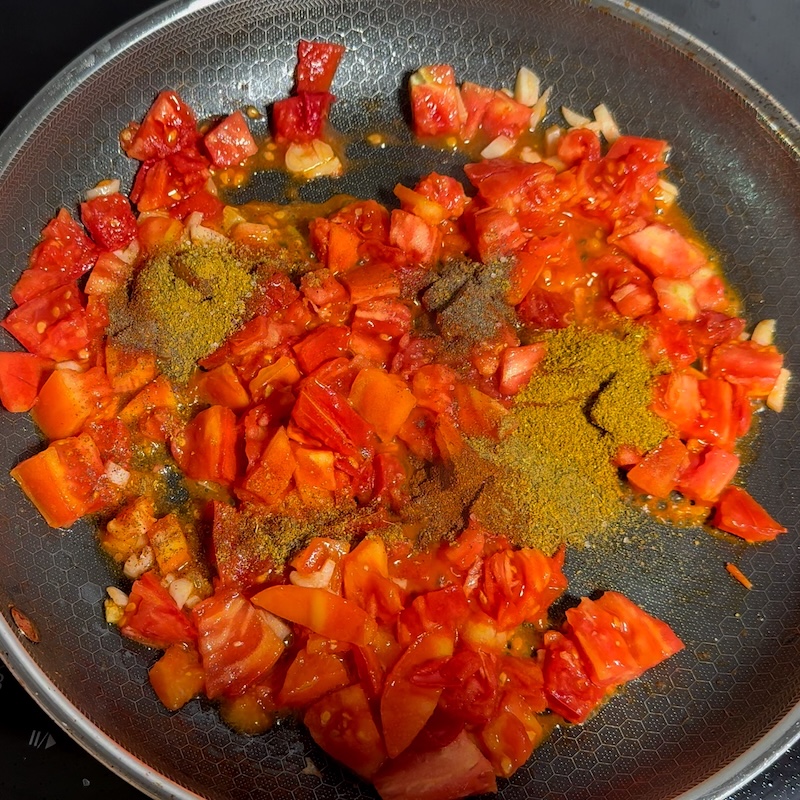
- Return the eggplant to the pan and pour in ½ cup of water.
- Cover with a lid and cook everything together for another 5 minutes, until soft and well blended.
- Let the mixture cool completely, then refrigerate.
- When serving, drizzle with olive oil, sprinkle with chopped parsley, some pine nuts, and optionally add harissa or fresh chili.
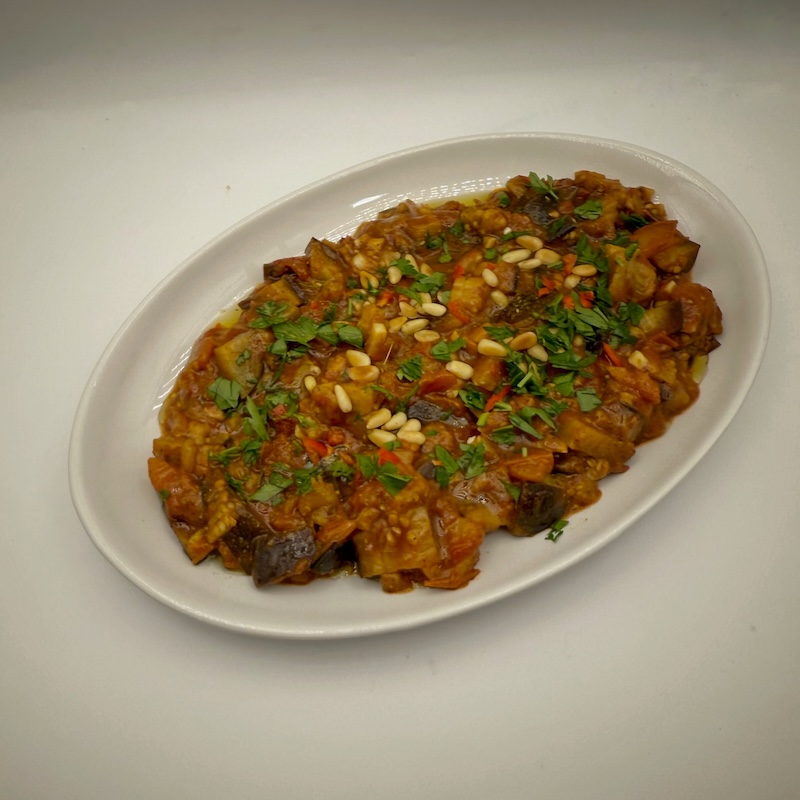
- This zaalouk recipe is best served chilled or at room temperature.
Understanding Zaalouk: Culture, History, and Inspiration
A Classic Moroccan Eggplant Dish
Zaalouk is a traditional Moroccan eggplant dish, often described as a warm salad, a spread, or even a Moroccan eggplant stew, depending on texture and region.
In Morocco, it’s commonly served as part of a mezze-style table, alongside fresh bread, other vegetable salads, and tagines.
My Personal Take on Zaalouk
The classic preparation often involves mashing or cooking the eggplant until very soft.
I chose to keep the eggplant in small chunks to preserve texture and make it feel more rustic. I also adjusted the spice balance slightly, adding a touch of sugar to round out the acidity of the tomatoes—something I tasted in a few home-style versions while traveling.
This makes the dish feel fuller and more balanced, especially when served cold as a zaalouk dip.
Why These Ingredients Work So Well Together
Eggplant provides a creamy base, tomatoes bring acidity and freshness, garlic adds depth, and the warm spices—cumin, coriander, ras el hanout—create that unmistakable Moroccan aroma.
Olive oil ties everything together, acting as both flavor carrier and texture enhancer. Parsley and chili at the end lift the dish and add contrast.
Nutritional Notes
This dish is naturally vegan, rich in fiber, antioxidants, and healthy fats from olive oil. Eggplant is low in calories but high in polyphenols, tomatoes contribute vitamin C and lycopene, and garlic supports heart health. Thus, it’s a nourishing dish that feels indulgent without being heavy.
Frequently Asked Questions
Here are a few common questions that often come up when talking about this dish:
Q: Zaalouk vs baba ganoush – what’s the difference?
A: While both are eggplant-based, baba ganoush uses tahini and is smoked, whereas zaalouk is tomato-based and spiced.
Q: Can zaalouk be frozen?
A: Yes, but the texture will soften slightly. It’s best enjoyed fresh or refrigerated for a few days.
Q: How do you eat zaalouk?
A: Traditionally with bread, as a side dish, or as part of a mezze spread.
Q: Is zaalouk served hot or cold?
A: Both are acceptable, but it’s most commonly served at room temperature or chilled.
Q: Is this a main dish or a side?
A: Zaalouk is typically a side, but it can easily become a light meal with good bread.
Conclusion
I truly hope you’ll test this dish at home and let these flavors transport you, even briefly, to Morocco.
If you do, don’t forget to tag us—we love seeing your versions. The full cooking video is available on YouTube, so be sure to check it out, and don’t forget to like, subscribe, and cook along with us.